
Getting Ready for the 2025 Lobster Mini Season in the Florida Keys
KEYS VIDEO ADVISORY July 29, 2025
Contacts: Mary B. Haban, Mary@fla-keys.com (813) 210-8585
Chad Newman, Chad@fla-keys.com (310) 283-8441
Story: Getting Ready for the 2025 Lobster Mini Season in the Florida Keys
Video source: Florida Keys News Bureau
Locator: Key Largo, Florida Keys
TRT: 3:24
Producers Note: SOTs of Officer Liam Rodriguez from Florida Fish and Wildlife Conservation Commission outline vital info in preparation for Florida Keys Lobster Mini Season. B-roll footage contains divers in the Florida Keys diving for lobster, measuring, etc., and outreach efforts by Rodriguez and spiny lobster researchers Kayla Merrill and Carly Hannah from Florida Fish and Wildlife Research Institute at Key Largo’s Diver’s Direct.
Video Link / English SOT: Click Here
Video Link / Spanish SOT: Click Here
Photo Link: Click Here
Photo Captions: Below
SOT Transcript: Below
Audio Link for Radio (English): Click Here
Audio Link for Radio (Spanish): Click Here
KEY LARGO, FLORIDA KEYS – Headed out to hunt for tasty crustaceans during this year’s Florida Keys Mini Lobster Season? The annual two-day event begins at 12:01 a.m. Wednesday and continues to midnight Thursday, providing visitors and locals alike with a recreational jumpstart to the lobster harvesting season that begins August 6.
Monroe County officials want boaters and divers to have fun, stay safe, and support sustainable behaviors while on and in the water. They coordinated with Florida Fish and Wildlife Conservation Commission (FWC) and their collaborating Research Institute (FWRI) to capture what you should know before you go.
- Register for a Florida Saltwater Fishing & Lobster Permit License. Every recreational harvester must have one. Visit gooutdoorsflorida.com, the FWC Fish/Hunt app, or a Monroe County tax office to get one.
- Fly a diver-down flag at your vessel’s highest point while harvesting and keep divers nearby – within 100 feet in navigational channels and 300 feet in open water. When underway, store the flag and stay alert for dive flags on other vessels and travel at idle speed, looking out for diver activity like bubbles or ripples on the water’s surface.
- Know the local harvest limits and restrictions. In Monroe County, “take” limits are six lobsters daily per harvester. Before you call it a keeper, measure as you catch to ensure the hard-shelled carapace is over three inches long before you take it out of the water. Multi-trips, taking egg-laden females, harvesting at night, diving, and wringing tails / tossing carcasses are strictly prohibited.
- Coral, seagrass, sponges, and historic underwater artifacts are both fragile and protected habitats for lobster and many other marine species. Please do your part to support them and future lobster populations by avoiding contact and disturbances.
KeysLobsterSeason.com is a dedicated website that includes interactive videos with need-to-know dive and boating safety tips, correct harvesting techniques, and updated rules and regulations. It also stresses prohibited no-take zones protected within Florida Keys National Marine Sanctuary boundaries.
###
SOTS_English: With Florida Fish and Wildlife Conservation Commission Officer Liam Rodriguez
Soundbite 1_ English: Dive Flag Safety
The most important piece of equipment you’re going to have on the boat during lobster season is your dive flag. If you have divers in the water, that dive flag must be displayed at the highest point of the vessel. Divers have to stay within 300 ft of that dive flag while in open waters and 100 ft while in a navigational channel.
Soundbite 2_English: Licensing and Bag Limits
Here in the Florida Keys, in order to harvest lobster, you must have a saltwater fishing license and a lobster permit. Uh, remind you that is six lobsters per day per licensed harvester,
Soundbite 3_English: Lobster Regulations (Size and Condition)
The size limit for lobster here in the Florida Keys is 3 in of the carapace, of the hard shell or greater. The lobster must be kept in whole condition while on the boat. And most importantly, if that lobster is egg bearing, it must be kept in the water. It is prohibited to harvest any egg bearing lobsters.
Soundbite 4_English: Environmental Protection
Make sure your gear, yourself, your hands, your fins are not touching the coral formations or rock formations or the sponges. It’s important to know that those are potential habitats for many, many other species. So, it’s important to protect them.
SOTS_Spanish: With Florida Fish and Wildlife Conservation Commission Officer Liam Rodriguez
Soundbite 1: Dive Flag Safety
Es importante poner la bandera de buceo a lo más alto del barco cuando hay buzos en el agua para la seguridad de los buzos. Lo que quiere decir que cada buzo que esté en el agua tiene que permanecer dentro de 300 pies de esa bandera, siempre y cuando esté en aguas abiertas del mar. Si está en ríos o en canales de navegación, los buzos deben mantenerse a 100 pies de esa bandera. De la misma manera, todos aquellos barcos que quieran pasar cerca de esa bandera tienen que pasar a más de 300 pies de la bandera en aguas abiertas, o a 100 pies de la bandera en canales de navegación.
Soundbite 2: Licensing and Bag Limits
Aquí en los Cayos de la Florida se necesita tener una licencia de pesca con el permiso de langosta para poder sacar langostas del agua. Son seis langostas por persona por día aquí en los Cayos de la Florida.
Soundbite 3: Lobster Regulations (Size and Condition)
Para que la langosta sea legal, el carapacho tiene que medir más de 3 pulgadas. La langosta no se puede separar, la cabeza de la cola, mientras uno está en el barco o en las aguas. Y también, lo más importante, es reconocer que si esa langosta tiene huevos, se tiene que mantener en el agua y no se puede sacar del agua. Es prohibido sacar una langosta del agua con huevos.
Soundbite 4: Environmental Protection
Es importante recordar, mientras uno está en el agua, no toquen los corales, no toquen las esponjas. Asegúrense de que sus patas de rana, su equipo de buceo, sus manos, que nada toque ninguna formación de coral o de piedra para proteger donde vive toda nuestra, nuestras especies marítimas.
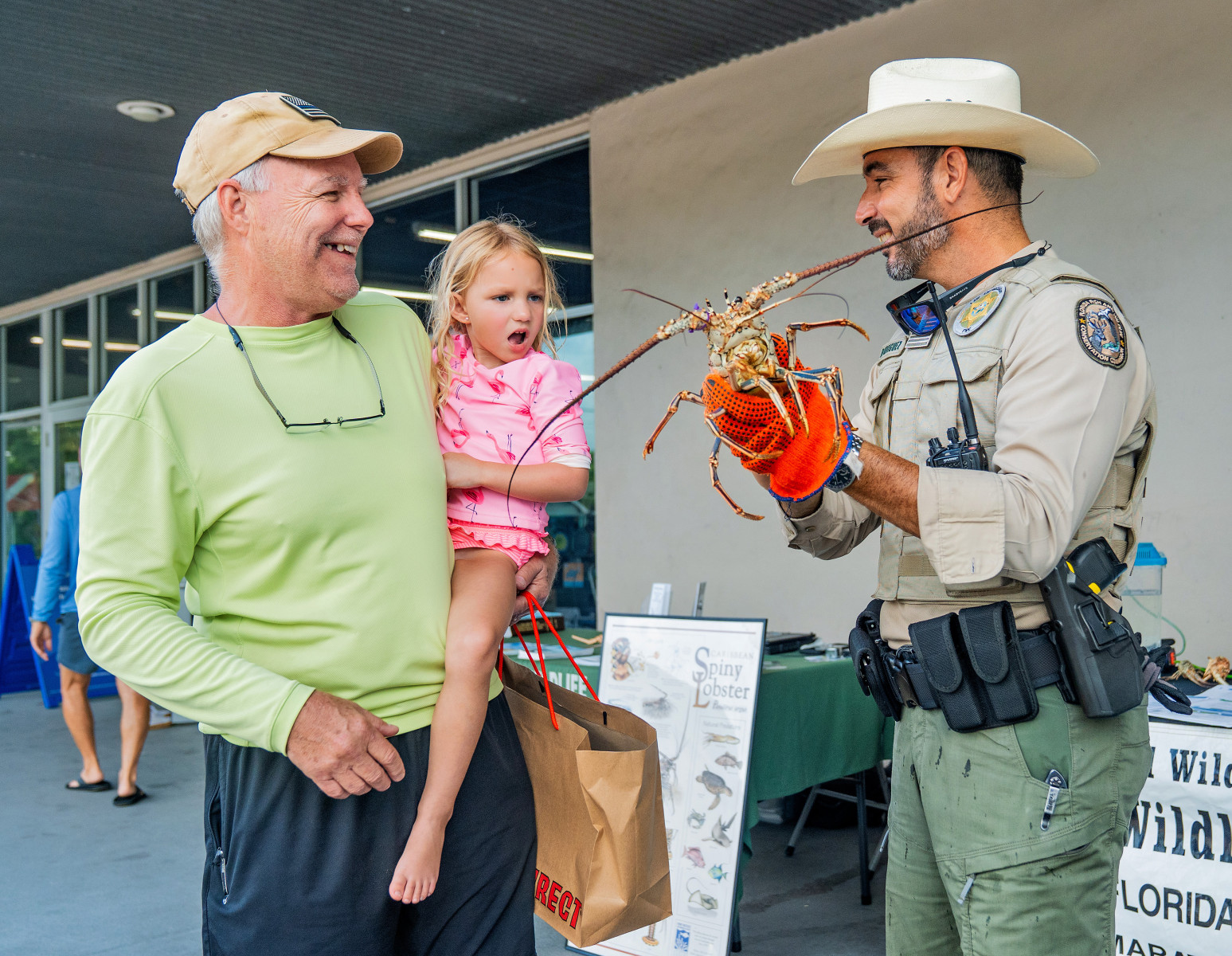
Four-year-old Penny Morgan from Clearwater, held by her grandfather James Lien from Naples, is not excited about Florida Spiny Lobster . . . or its Florida Keys mini season. FOR EDITORIAL USE ONLY (Landon Jones / Florida Keys News Bureau).
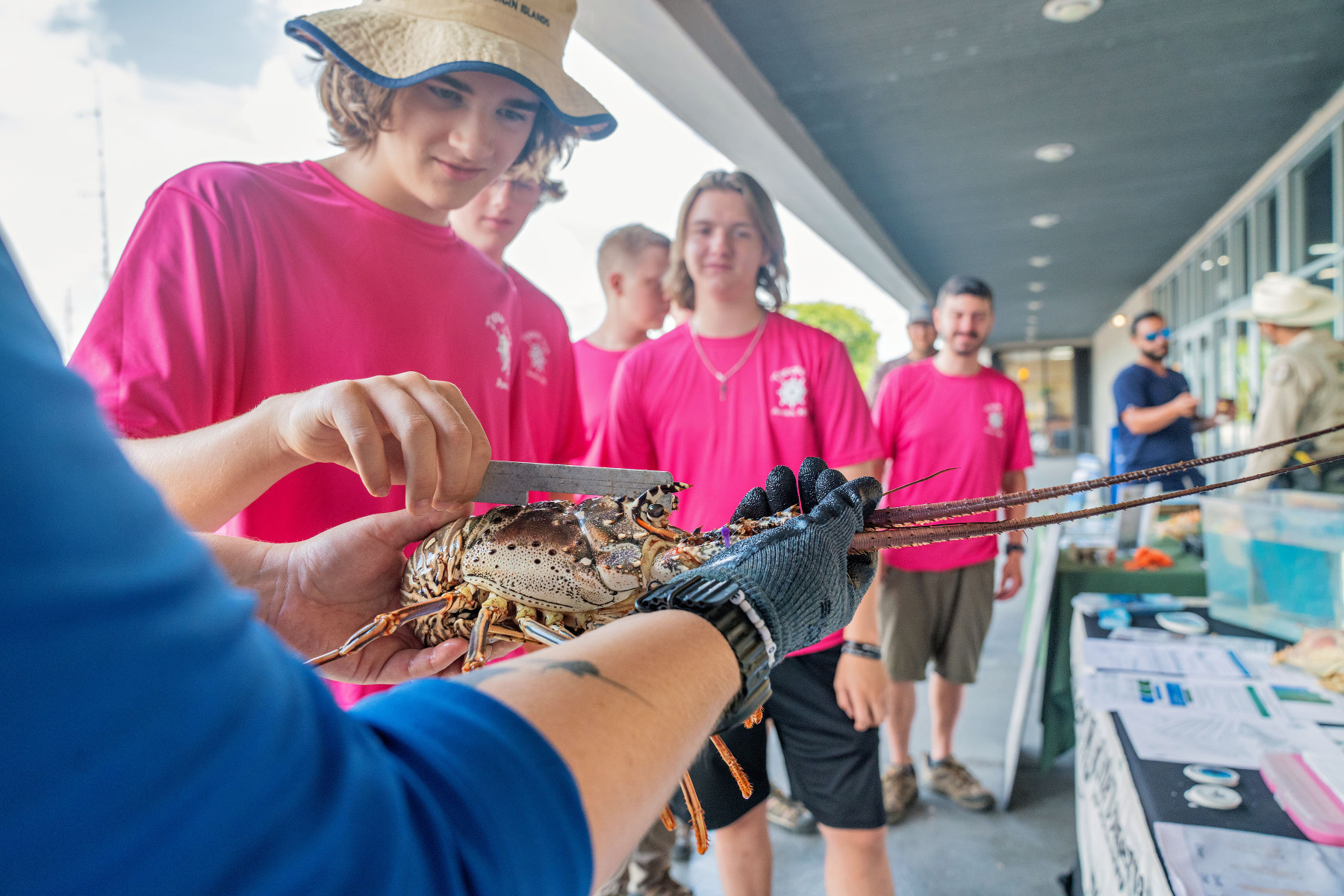
Boy Scouts Troop 204 from MInnesota visiting Florida Keys Seabase in Islamorada learn how to measure a carapace for legal size limits before the lobster mini season officially opens at 12:01am on Wednesday, July 30. FOR EDITORIAL USE ONLY (Landon Jones / Florida Keys News Bureau).
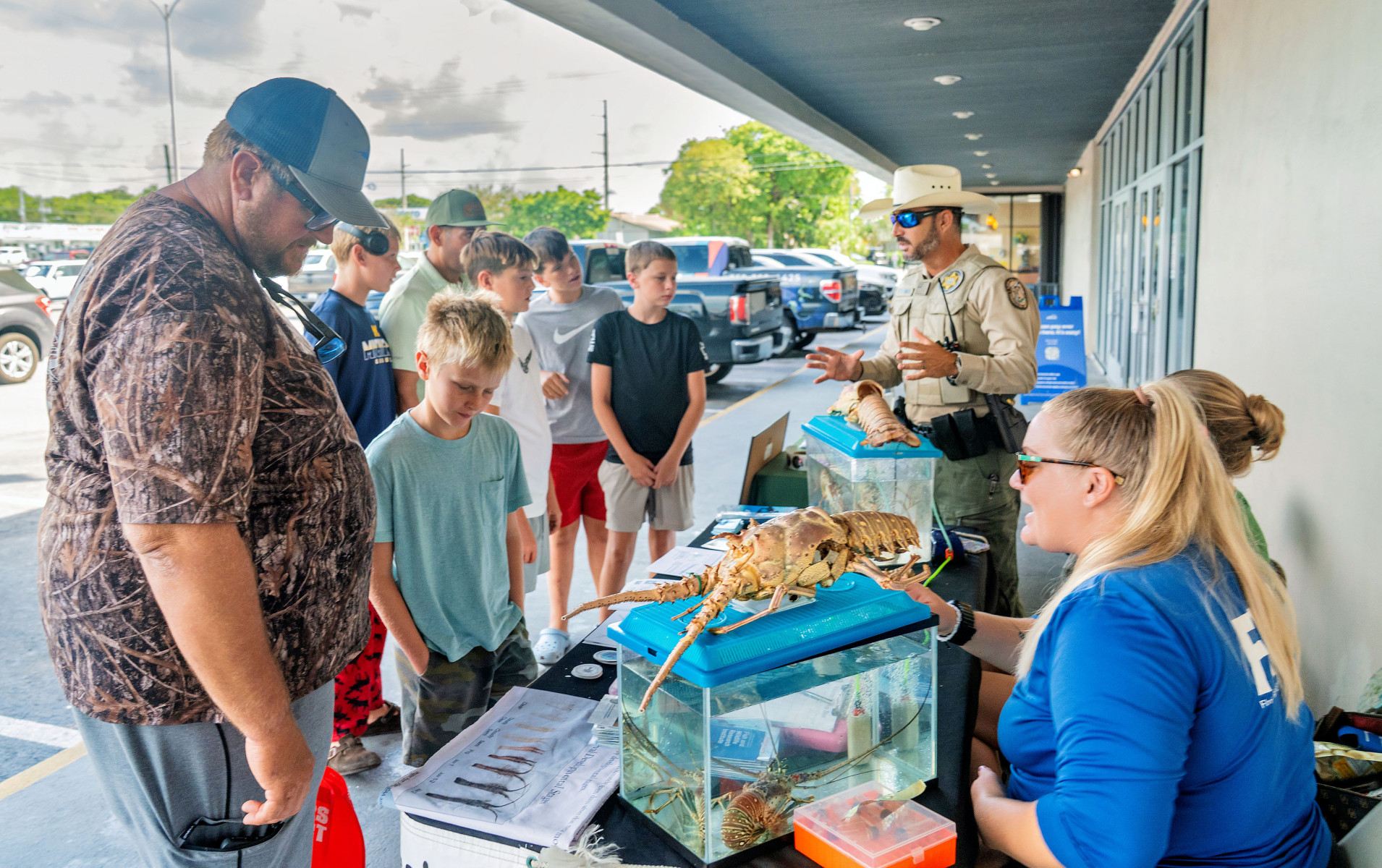
FWC Officer Liam Rodriguez and FWRI spiny lobster researchers Kayla Merrill and Carly Hannah engage crowds with their outreach efforts at Key Largo’s Diver’s Direct preceding the kickoff to Lobster Mini Season in the Florida Keys. FOR EDITORIAL USE ONLY (Landon Jones / Florida Keys News Bureau).