
‘Let’s Get It Spawn’: Coral Reefs in the Keys Put on a Moonlit Show
FLORIDA KEYS VIDEO ADVISORY Aug. 19, 2025
Contact: Mary B. Haban, Visit Florida Keys, mary@fla-keys.com (813) 210-8585
Chad Newman, Visit Florida Keys, chad@fla-keys.com (310) 283-8441
Story: ‘Let’s Get It Spawn’: Coral Reefs in the Keys Put on a Moonlit Show
Locator: Key Largo, Florida Keys
Video Link: Click Here
Photo Link: Click Here
Photo Captions Below
Audio Link for Radio: Click Here
Underwater B-roll of coral spawning at Reef Renewals USA’s offshore nursery in Key Largo, Fla. SOT with Gabrielle Rosenbacher Education Program Manager at Reef Renewal USA.
TRT: 2:40
Filename: KeysCoralSpawn.mp4
Video source: Florida Keys News Bureau
Producer Note: Gametes is pronounced GAM-eets
Photos & Captions: Below
‘Let’s Get It Spawn’: Coral Reefs in the Keys Put on a Moonlit Show
KEY LARGO, Florida Keys – Marvin Gaye once sang “Let’s Get It On,” but when it comes to coral reefs in the Florida Keys National Marine Sanctuary, “Let’s Get It Spawn” is more like it.
Over the weekend, a fascinating yet fragile reproductive phenomenon called the coral spawn, took place in the Upper Keys at one of Reef Renewal USA’s offshore nurseries. In August annually, after the full moon, millions of gametes, or reproductive cells, are released underwater in a synchronized mass-spawning exchange, enabling the eggs and sperm to enter the water. When the egg and sperm unite, newly formed larvae, or planulae, ascend to the surface and free-float in the current for days, or sometimes weeks. The hope is that the planulae will settle to the bottom to grow into polyps and potentially form new coral colonies. It’s still a mystery which night it will occur so divers went out over the course of four nights.
“We were able to witness this ‘snow globe effect’ in the ocean. It was an incredible and rare experience,” said Gabrielle Rosenbacher education program manager at Reef Renewal USA.
University of Miami biologists joined to observe the spawning events and collect the gametes, to crossbreed some and cryopreserve others for future breeding.
“We created some unique structures for this spawning event to hold some of our most mature corals individually,” Rosenbacher said. “If they do spawn, we can quickly place a tent over them to collect the gametes and bring them back to the lab.”
The event showed that the coral involved are healthy and resilient enough to start the reproductive process. The Florida Keys National Marine Sanctuary is home to the only living Barrier reef in North America, and spawning events are important for genetic diversity of coral reefs.
###
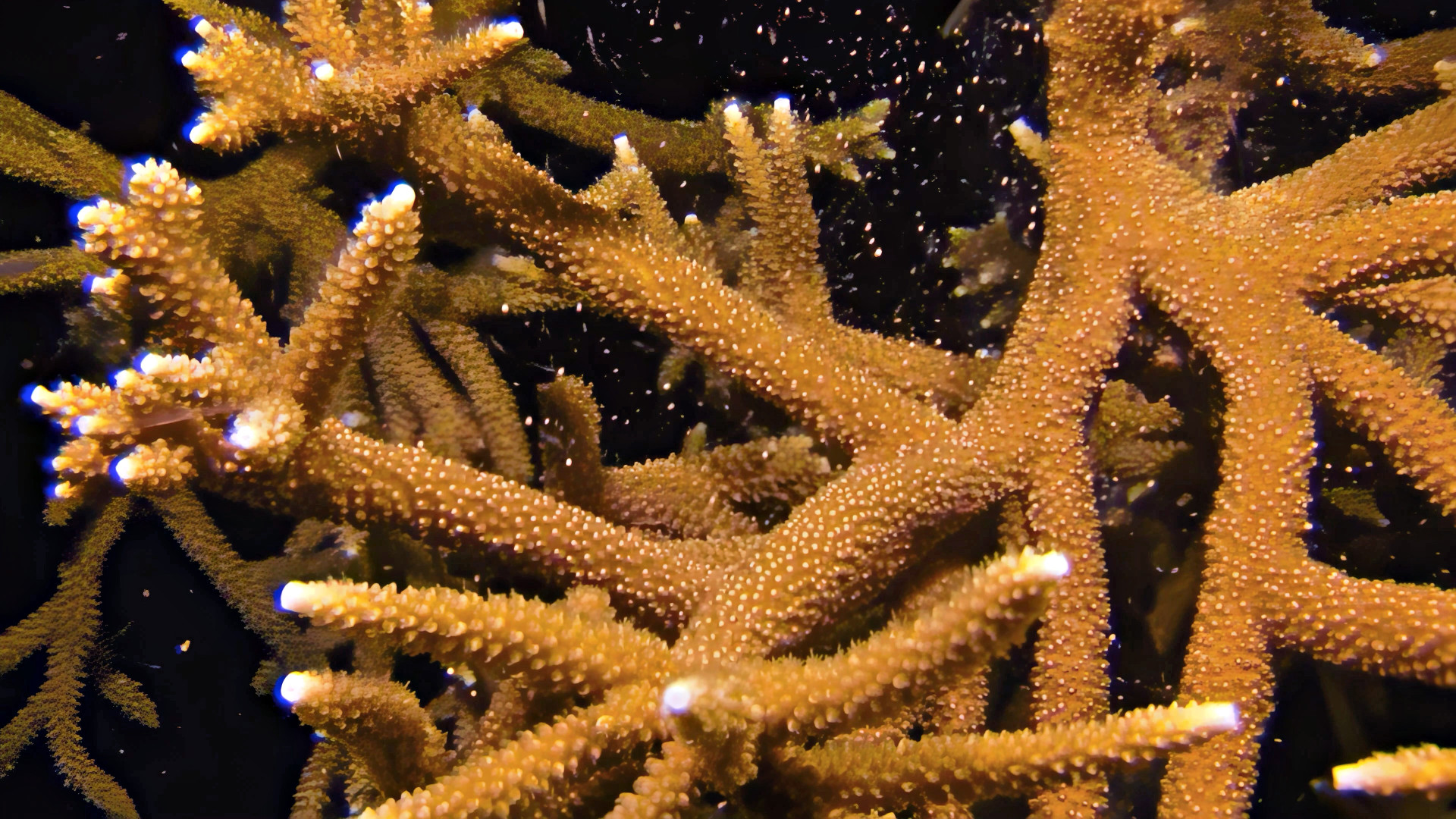
'Let's Get It Spawn': Coral reefs in the Florida Keys released millions of gametes (eggs and sperm) during a moonlit mass spawning event near Key Largo. The rare phenomenon creates a "snow globe effect" as reproductive cells drift through the water column. This annual event, which occurs only once a year in August, several days after the full moon, was captured at one of Reef Renewal USA's offshore coral nurseries, a vivid sign of coral health and resilience. FOR EDITORIAL USE ONLY (Frazier Nivens/Florida Keys News Bureau)
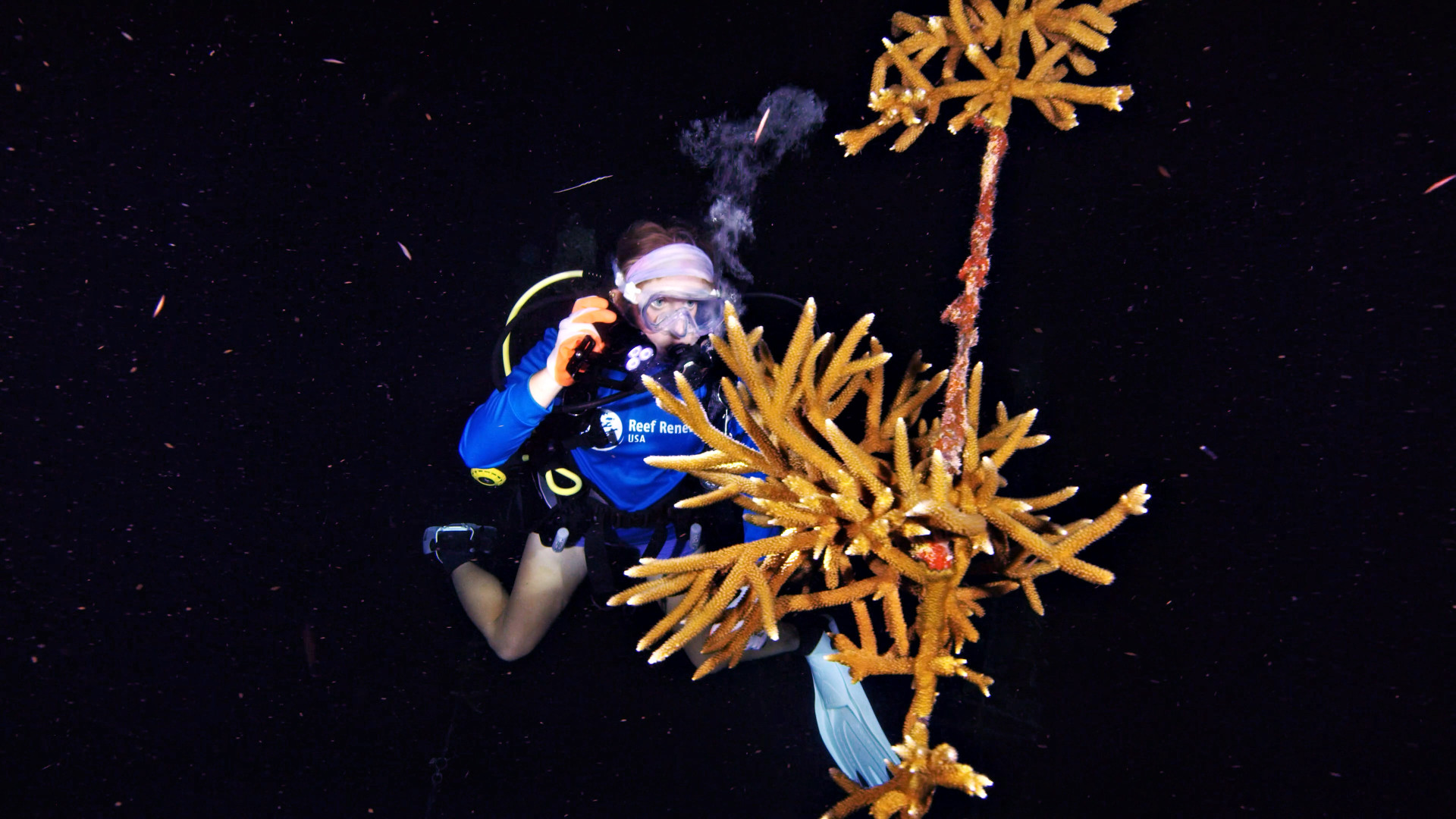
A diver from Reef Renewal USA examines a coral 'tree' in the nonprofit's offshore nursery near Key Largo, checking for signs of spawning. Each August, several days after the full moon, corals release millions of gametes (eggs and sperm) in a synchronized reproductive event. The spawn is vital for genetic diversity and offers a hopeful sign of resilience for North America's only living coral barrier reef. FOR EDITORIAL USE ONLY (Frazier Nivens/Florida Keys News Bureau)
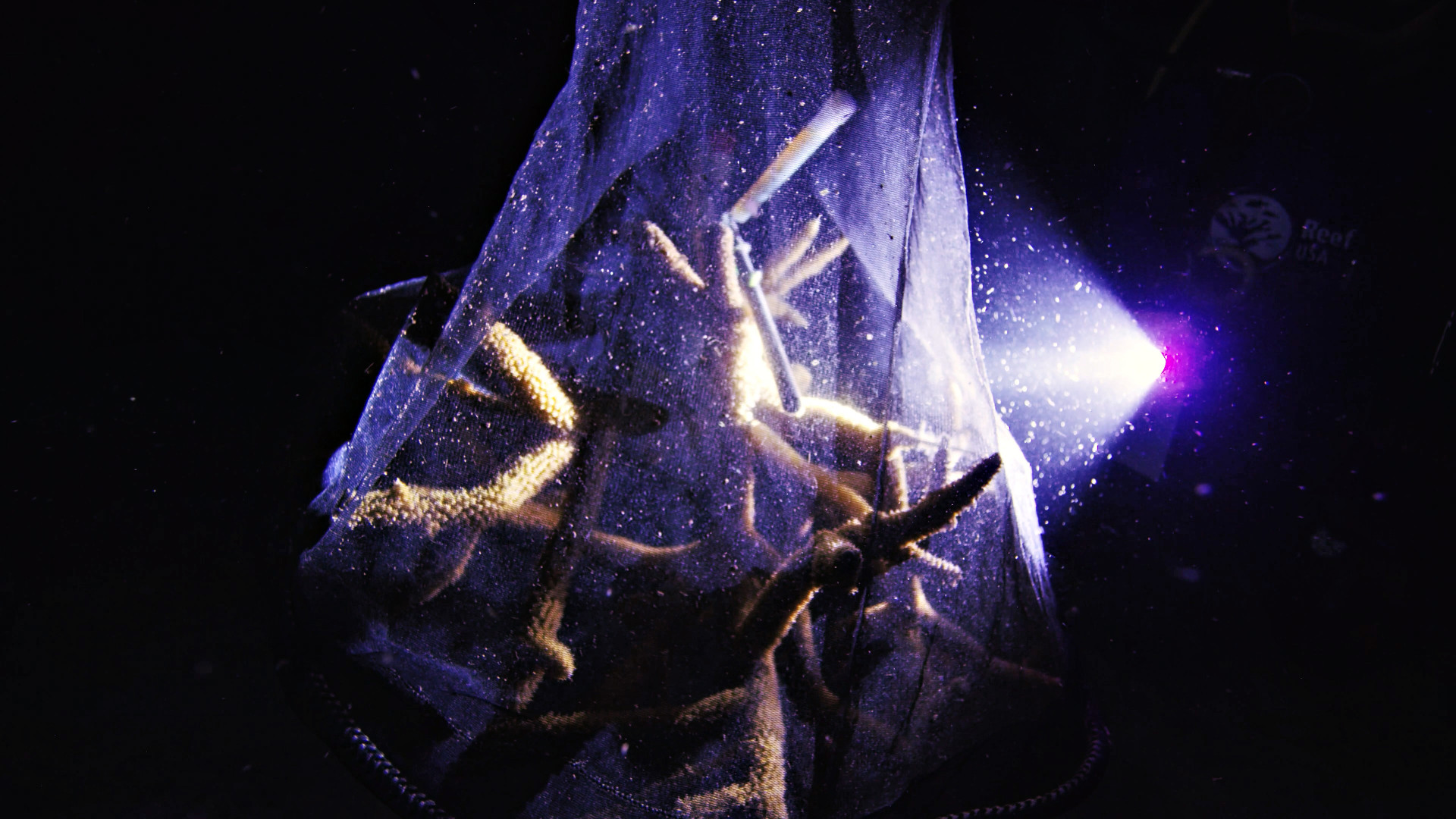
A diver from Reef Renewal USA examines a coral 'tree' in the nonprofit's offshore nursery near Key Largo, checking for signs of spawning. Each August, several days after the full moon, corals release millions of gametes (eggs and sperm) in a synchronized reproductive event. The spawn is vital for genetic diversity and offers a hopeful sign of resilience for North America's only living coral barrier reef. FOR EDITORIAL USE ONLY (Frazier Nivens/Florida Keys News Bureau)
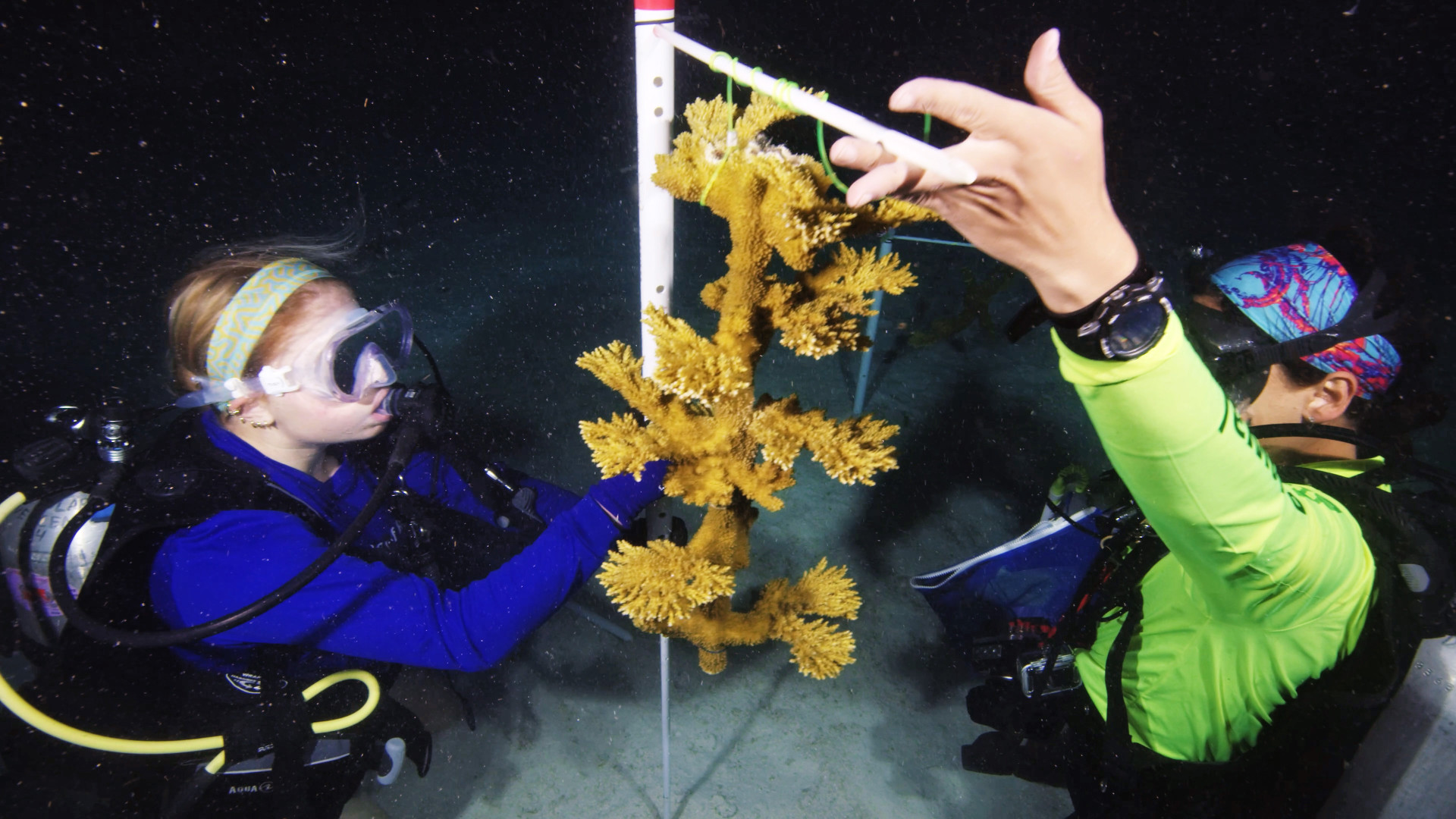
Divers from Reef Renewal USA position mature staghorn and elkhorn corals in their offshore nursery, preparing for the annual spawning event. When corals release their gametes (eggs and sperm), researchers quickly deploy nets to capture the reproductive cells. Scientists then use the collected spawn for crossbreeding programs and cryopreservation, supporting future reef restoration and genetic diversity efforts. FOR EDITORIAL USE ONLY (Frazier Nivens/Florida Keys News Bureau)