
The Reef’s Night to Shine: Corals Spawn in the Florida Keys
FLORIDA KEYS VIDEO ADVISORY August 1, 2026
Contacts: Chad Newman, Chad@fla-keys.com (310) 283-8441 or Mary B. Haban, Mary@fla-keys.com (305) 394-3142
Story: The Reef’s Night to Shine: Corals Spawn in the Florida Keys
Locator: Key Largo, Florida Keys
Usage: HANDOUT / RIGHTS CLEARED (Unlimited Broadcast & Digital)
Video Link: Click Here
Photo Link: Click Here
Photo Captions Below
Video: B-roll of coral spawning and divers collecting gametes at Reef Renewal USA’s offshore nursery near Key Largo, Florida Keys. SOT with Reef Renewal USA technical director Ken Nedimyer.
Technical Data:
TRT: 1:00
Filename: KeysCoralSpawn.mp4
Audio: Stereo Mix
SOTs: Clean / Isolated
B-Roll: Nat. Sound
Credit: Florida Keys News Bureau (Screen credit appreciated, not mandatory)
NOTE TO EDITORS/PRODUCERS: Gametes is pronounced GAM-eets.
The Reef’s Night to Shine: Corals Spawn in the Florida Keys
KEY LARGO, Florida Keys (August 1, 2026) — Millions of tiny eggs and sperm rose through the water off Key Largo as staghorn and elkhorn corals spawned. Divers gathered the reproductive cells to help grow the next generation of Florida Keys corals.
The annual reproductive event unfolded at Reef Renewal USA’s offshore nursery, where teams spent 10 nights diving to watch for spawning and collect the released material.
These corals reproduce through broadcast spawning, releasing eggs and sperm, known as gametes, into the water in a closely synchronized exchange. The event typically follows a summer full moon, with lunar cycles and water temperature helping cue the release.
“We don’t know how these corals communicate with each other to all spawn within ten minutes of each other,” said Ken Nedimyer, Reef Renewal USA’s technical director, “but their timing is impeccable.”
Divers used collection tents and test tubes to gather the gametes before rushing them ashore. At a temporary laboratory at John Pennekamp Coral Reef State Park, scientists from Mote Marine Laboratory and The Florida Aquarium paired eggs and sperm from different parent colonies.
The effort produced more than 1.5 million coral embryos, according to the project team.
Fertilized eggs develop into free-swimming larvae called planulae. After drifting for days or weeks in the ocean, larvae can settle onto suitable surfaces and become polyps, the tiny animals that build coral colonies. In restoration facilities, scientists provide prepared surfaces for the young corals to settle and grow.
The nursery’s parent corals survived the 2023 marine heat wave that devastated coral populations throughout the Florida Keys. Researchers are breeding these survivors to increase genetic diversity and work toward corals better able to withstand future heat stress.
The young corals will grow at land-based facilities across Florida. Researchers expect many to be ready for transplanting onto Florida Keys reefs within about two years.
###
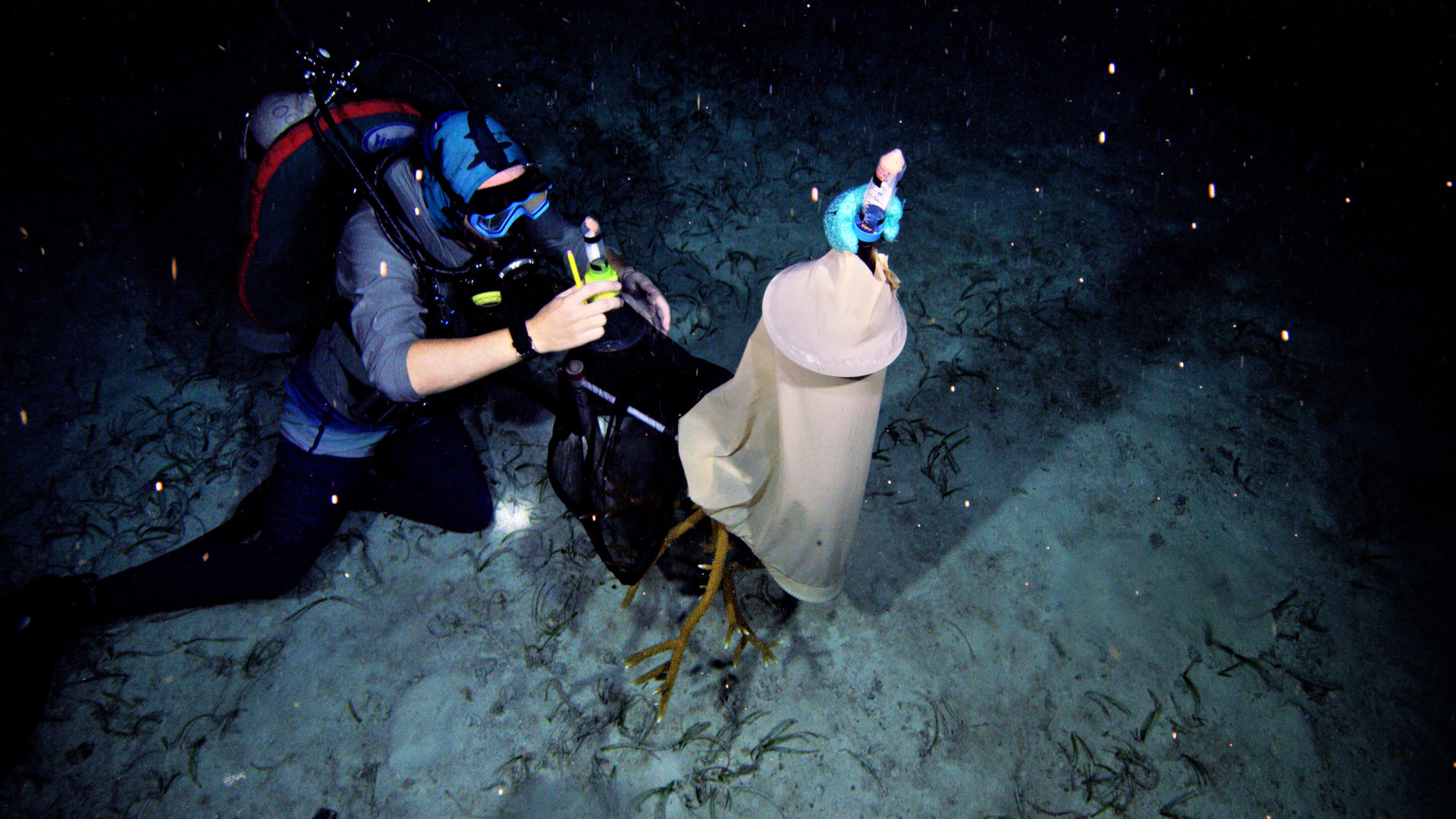
A Reef Renewal USA diver collects coral gametes, or eggs and sperm, beside a collection net at the nonprofit’s offshore nursery near Key Largo, Florida Keys. During the annual spawning event, corals release reproductive cells in a closely synchronized exchange. Divers gather the material and bring it ashore, where scientists pair eggs and sperm from different parent colonies to grow genetically diverse corals for reef restoration. (Frazier Nivens/Florida Keys News Bureau)
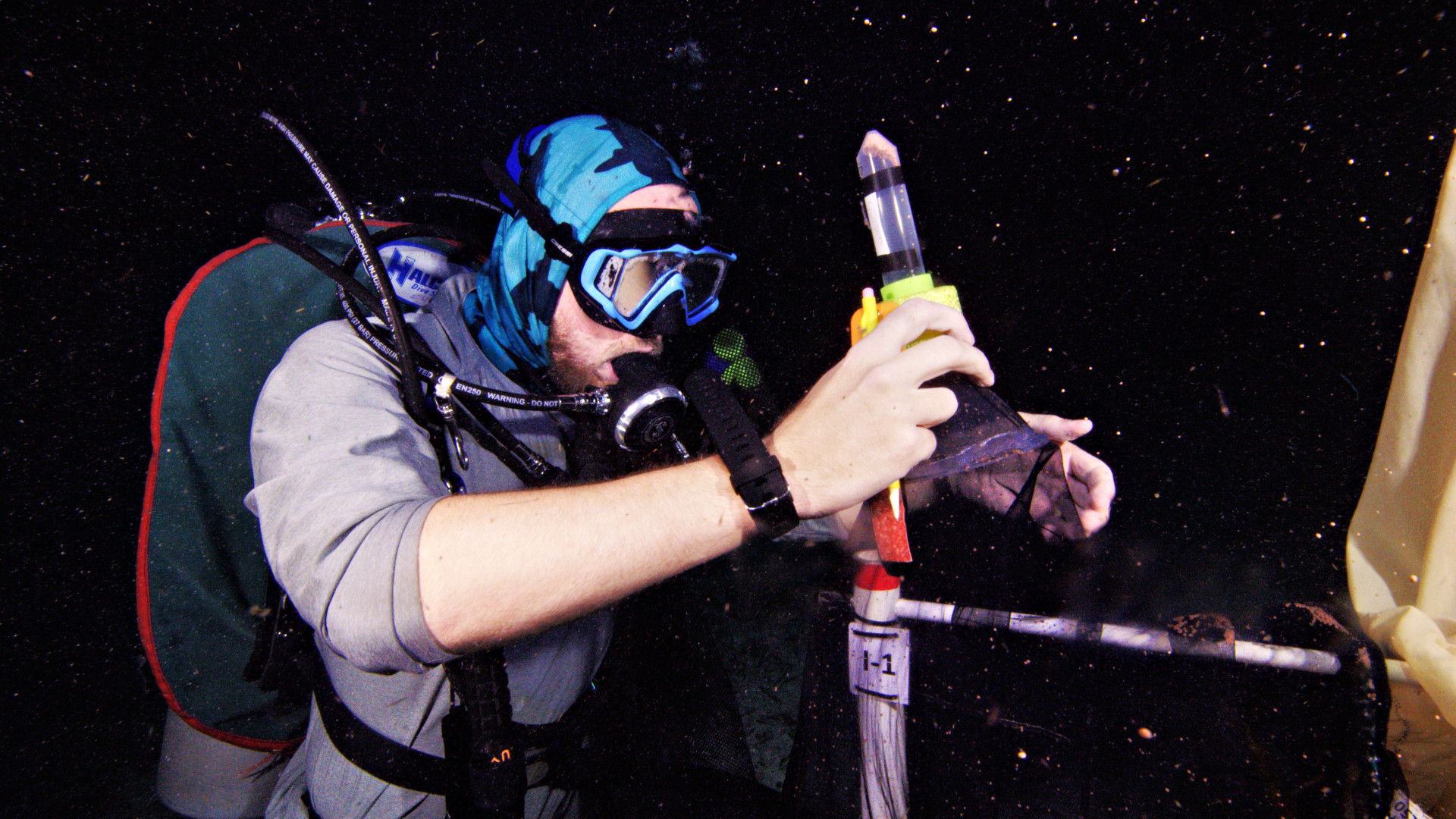
A Reef Renewal USA diver handles a collection tube during coral spawning at the nonprofit’s offshore nursery near Key Largo, Florida Keys. Scientists use the collected eggs and sperm to breed the next generation of corals. This year’s effort produced more than 1.5 million embryos, according to the project team. The young corals will grow at land-based facilities before eventual transplanting onto Florida Keys reefs. (Frazier Nivens/Florida Keys News Bureau)